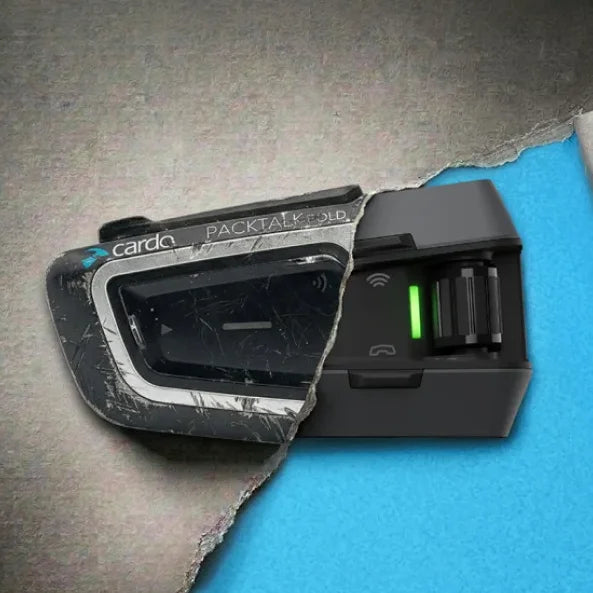


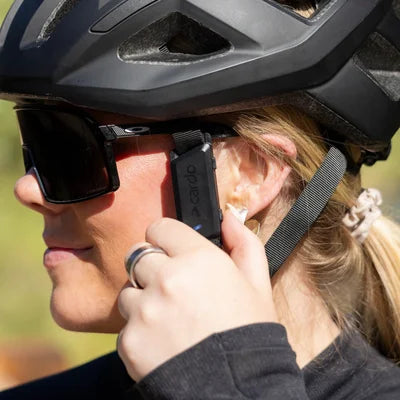



A UTV intercom solves the one thing that kills group rides fast: nobody can hear anyone. Cardo builds two units for off-road crews, the Packtalk Edge ORV and the Edgephones ORV, both running the same 2nd Generation DMC mesh that connects up to 31 riders without a phone signal.
Why UTV and Side-by-Side Crews Need Dedicated Comms
Engine noise inside a UTV cab runs loud enough to swallow a shout from three feet away. Add wind, tires grinding over gravel, and a passenger turned sideways to point at something on the trail, and a driver ends up reading lips more than listening. That's true whether you're driving a dedicated UTV or a side-by-side, and it's worth knowing the difference between an ATV and a UTV before you buy comms built for one or the other. Most crews try to solve the noise problem the wrong way first: a phone propped in a cup holder on speaker, or a group chat app nobody checks until the ride's already over.
Neither holds up. A phone speaker can't compete with a UTV engine at speed, and a group chat needs a data signal that disappears the moment you're deep enough in the backcountry to actually need reliable comms. A dedicated intercom solves both problems at once. It builds its own mesh network directly between units, so range and connection quality don't depend on how many bars your phone shows.
Packtalk Edge ORV vs. Edgephones ORV: Which Fits Your Setup

Cardo builds two ORV units around the same core electronics, and the choice comes down to whether your crew rides in helmets.
Buy Packtalk Edge ORV If...
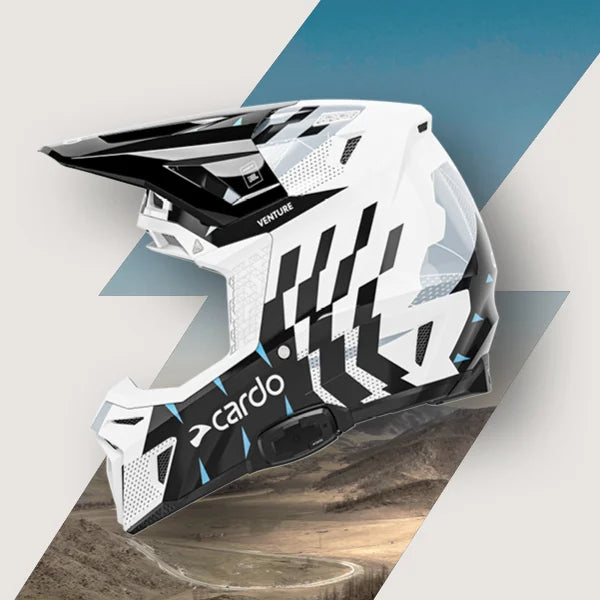
...you and your crew wear helmets on the trail. The Packtalk Edge ORV clips onto a helmet with Cardo's magnetic Air Mount, the same tool-less system used across the motorcycle Packtalk line, so it snaps on and off in seconds. It's the right pick for drivers and helmeted passengers who want the intercom mounted where they already wear their gear.
Buy Edgephones ORV If...
...your crew rides open-cab without helmets, which covers a large share of UTV and side-by-side riders. Edgephones ORV pairs an Edge ORV core unit with Cardo's open-ear ORV headphones, so you get the same mesh network and the same 40mm JBL sound without a helmet to mount anything to. It's built especially for passengers, since a UTV passenger seat rarely comes with a helmet at all.
|
Spec |
Packtalk Edge ORV |
Edgephones ORV |
|
Price |
$439.95 |
$529.95 (bundle: Edge ORV unit + ORV headphones) |
|
Use case |
Helmet-mounted |
Helmet-free / open-cab |
|
Mount |
Air Mount (magnetic, tool-less) |
Worn without a helmet |
|
Speakers |
40mm JBL |
40mm JBL |
|
Group size |
Up to 31 riders (2nd Gen DMC) |
Up to 31 riders (2nd Gen DMC) |
|
Range |
1.6km / 1mi rider-to-rider, 8km / 5mi group |
1.6km / 1mi rider-to-rider, 8km / 5mi group |
|
Battery |
13 hours talk time |
13 hours talk time |
|
Waterproofing |
IP67 |
IP67 |
|
Bluetooth |
5.2 |
5.2 |
|
Warranty |
Unconfirmed - flagged below |
Unconfirmed - flagged below |
The Difference Between UTV Comms and Motorcycle Intercoms

A motorcycle intercom is built to beat wind noise at highway speed, with one rider per unit and a helmet as the mounting point. A UTV cab runs a different set of problems. Engine and drivetrain noise sits closer to the rider than wind does on a bike, several passengers often ride in the same vehicle rather than spread across separate bikes, and a meaningful share of riders don't wear a helmet at all.
That's why Cardo built the ORV line as its own product family instead of repackaging the standard Packtalk Edge for off-road use. Edgephones ORV in particular has no equivalent in the motorcycle lineup, because motorcycle riders wear a helmet by default and UTV passengers often don't. Both ORV units still run the same 2nd Generation DMC mesh as the motorcycle units, so a mixed group, say three riders on dirt bikes and two in a UTV, can join the same network without switching intercom brands. For the full picture across Cardo's range, compare every current unit side by side.
Setting Up Group Communication for a UTV Crew
1. Charge every unit fully before the ride. A full charge on either the Edge ORV or Edgephones ORV runs 13 hours of talk time, enough for a full day on the trail.
2. Mount the units. Snap the Edge ORV onto each helmet using the Air Mount, or fit the Edgephones ORV headset on riders without one.
3. Power on the first unit and press its intercom button to start pairing.
4. Power on each additional unit within a few seconds of the first. The 2nd Generation DMC mesh detects nearby units automatically and builds the group network without manual pairing steps.
5. Confirm the connection with a voice check across the crew before pulling onto the trail.
6. Say "Hey Cardo" to test Natural Voice Operation, which lets the driver keep both hands on the wheel while adjusting volume or answering a call mid-ride.
Frequently Asked Questions
Can I use a regular motorcycle intercom in a UTV?
Yes, technically, but it won't solve the actual problem. A standard motorcycle intercom is built for wind noise at speed and assumes one rider per helmet. A UTV cab's biggest issue is engine and drivetrain noise close to the rider, plus passengers who often skip a helmet entirely, which the ORV line is built to handle and the standard motorcycle units aren't.
How many riders can connect on a UTV crew intercom?
Both the Packtalk Edge ORV and Edgephones ORV connect up to 31 riders on a single 2nd Generation DMC mesh network. The network is self-healing, so if one rider drops out of range, the group reconnects automatically once they're back in range instead of losing the whole crew.
Does it work without cell service on the trail?
Yes. DMC mesh builds its own network directly between units and never touches a phone's data or cellular signal, which is the main reason it holds up better than a group chat app once you're far enough into the backcountry to actually need reliable comms.
What's the range between vehicles?
Up to 1.6km (1 mile) unit-to-unit, and up to 8km (5 miles) across the full group mesh, since each rider's unit can relay the signal for others. Real-world range varies based on terrain and obstacles, so dense tree cover or deep valleys will bring that distance down.