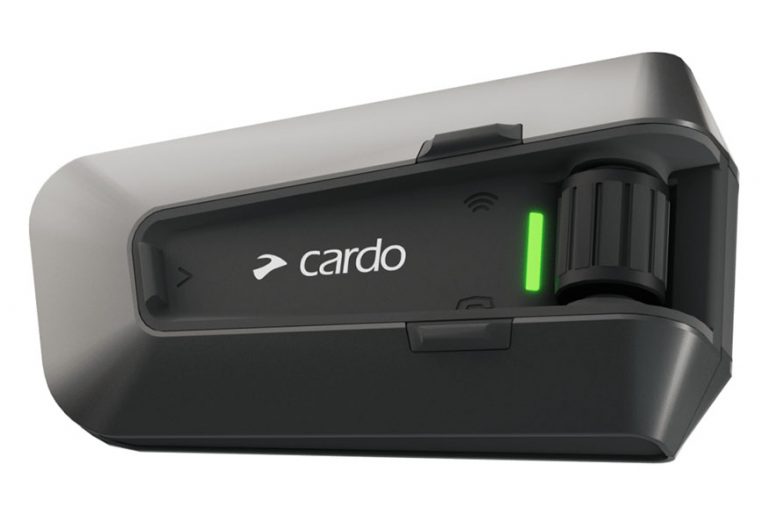
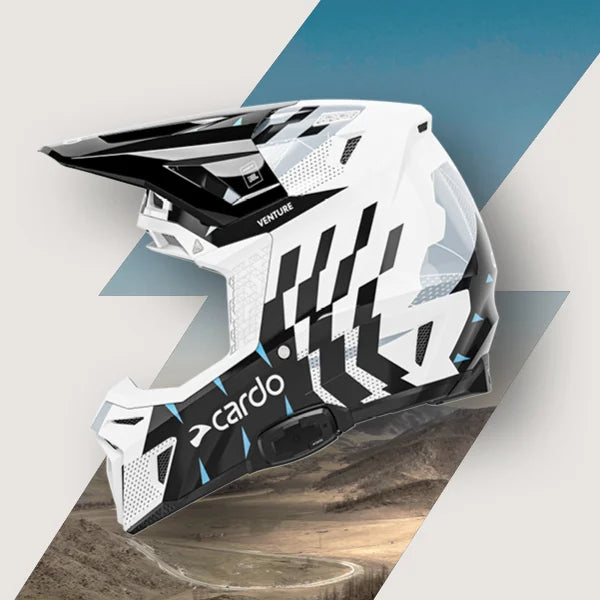
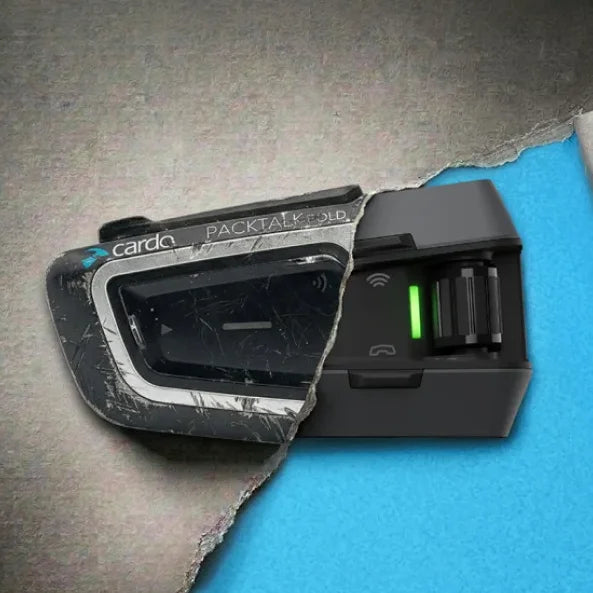


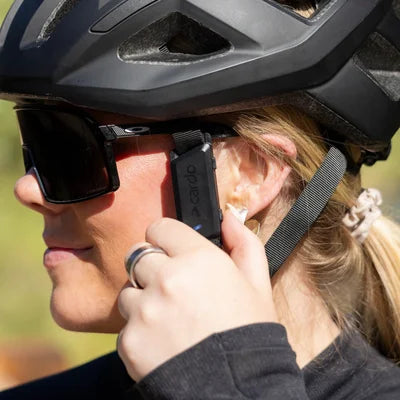



Most Cardo units run JBL speakers built into the intercom system. The Packtalk Pro uses 45mm JBL speakers, the largest in the lineup, while the Packtalk Edge, Packtalk Neo, and Freecom 4X all run 40mm JBL speakers. The size difference shows up mostly at higher volumes and highway speeds, where the larger driver holds clarity better against wind and engine noise. For most riders, the gap between the two sizes is noticeable but not the deciding factor between units.
Speaker Size Quick Reference
|
Model |
Speaker Size |
|
Packtalk Pro |
45mm JBL |
|
Packtalk Edge |
40mm JBL |
|
Packtalk Neo |
40mm JBL |
|
Freecom 4X |
40mm JBL |
Why Speaker Size Isn't the Whole Story

A 45mm driver has more surface area to move air, which generally means more headroom at high volume before the sound starts to distort. That matters most at highway speed, in an open or vented helmet, or for riders who like music and calls loud enough to cut clearly through wind noise. Below that threshold, most riders can't reliably tell a 40mm JBL speaker from a 45mm one by ear.
Fit and placement inside the helmet affect sound quality as much as driver size does. A speaker seated too far from your ear, even a larger one, will sound worse than a smaller speaker positioned correctly.
Cardo speakers use the same slim profile across all current units, so the fit question comes down to your helmet's ear cavity depth rather than the speaker itself.
Matching Speaker Size to How You Ride

Solo tourers and riders who spend long stretches at highway speed get the most out of the 45mm JBL speakers on the Packtalk Pro, especially paired with the Pro's Crash Detection for remote or solo riding. Group and club riders, where mesh capacity matters more than a few extra millimeters of driver size, do just as well on the 40mm JBL speakers in the Packtalk Edge, which runs the same 15-rider DMC network at a lower price. Riders easing into the DMC ecosystem on a budget get identical 40mm JBL speakers on the Packtalk Neo, and riders who don't need mesh at all get the same speaker size on the Freecom 4X.
Not sure which unit fits your riding style beyond speaker size? The product comparison page lines up the full spec sheet across the current range.
Motorcycle Helmet Speakers FAQs
Do bigger speakers sound better?
Not decisively. The 45mm JBL speakers on the Packtalk Pro hold clarity a little better at high volume and highway speed than the 40mm JBL speakers on the Edge, Neo, and Freecom 4X, but for most riders the difference is noticeable rather than deciding. Fit inside the helmet affects sound quality as much as driver size does.
Can I upgrade my Cardo speakers?
Cardo speakers are built into each unit's audio system rather than sold as a separate swappable component. If you want the 45mm JBL speakers specifically, that means moving up to the Packtalk Pro rather than replacing the speakers on an Edge, Neo, or Freecom 4X. For a damaged or malfunctioning speaker, contact Cardo support for repair and replacement options.
What size are the speakers on the Packtalk Pro?
45mm JBL, the largest speaker size in the current Cardo lineup.
Are all Cardo helmet speakers the same size?
No. The Packtalk Pro runs 45mm JBL speakers. The Packtalk Edge, Packtalk Neo, and Freecom 4X all run 40mm JBL speakers.
Does speaker size affect which units can group ride together?
No. Speaker size has no effect on mesh compatibility. The Packtalk Pro, Edge, and Neo all run the same 2nd Generation DMC network regardless of their speaker size, so a mixed group of these units still meshes together at full range and rider capacity.