
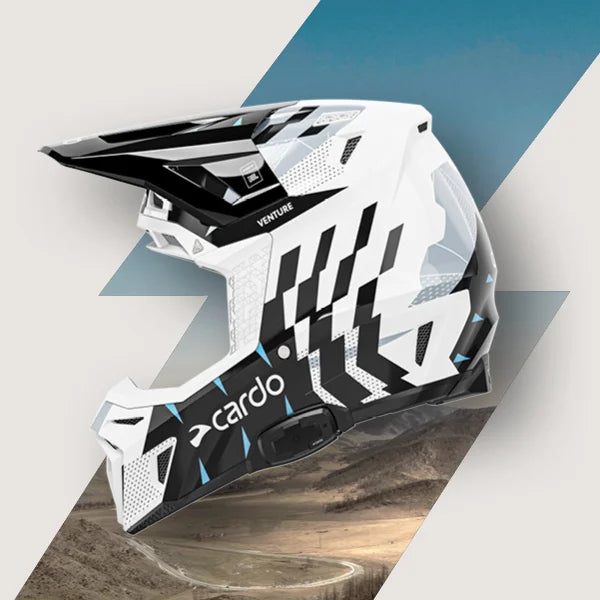


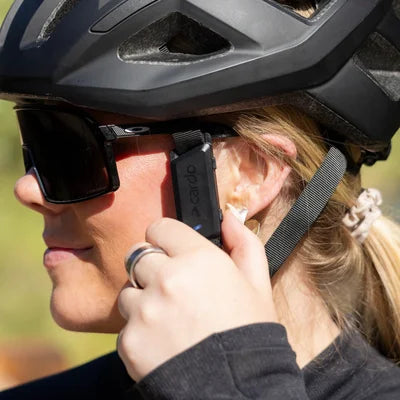



You can wear headphones while skiing, and plenty of skiers do, but earbuds and AirPods come with trade-offs on the mountain. They block the sounds you rely on to stay safe, the helmet pushes them into your ears, and their small batteries drain fast in the cold. If you want music without those problems, speakers that sit inside your helmet's ear pads keep your ears open, and a helmet intercom adds the option to talk to your group hands-free.
This guide is for skiers and snowboarders who already own a pair of earbuds and want to know whether to bring them. It covers the safety question first, then the options you can use without changing your helmet, and what to do if you also want to stay in touch with the people you ski with.
Is It Safe to Wear Headphones While Skiing?

Safety on a busy slope depends on what you can hear as much as what you can see. You hear a snowboarder scraping up behind you before they reach you, a ski patroller calling out a closure, a lift operator telling you to wait, or a friend shouting that your binding has popped open. Sealed earbuds and noise-cancelling modes cut most of that out, and loud music cuts out the rest.
The skier responsibility code that most North American resorts follow asks you to stay in control and give way to people downhill of you. Both rules get harder to follow when you can't hear the slope around you. Most resorts don't ban headphones outright, but many ski schools ask students to take them out during lessons so they can hear the instructor, and some terrain parks discourage them. Check the rules at your resort and in your lesson booking.
If you ski with music, a few habits cut the risk. Keep the volume low enough to hear someone talking a few meters away. Turn transparency or ambient mode on if your earbuds have it, and turn noise cancelling off. Use one earbud instead of two on busy runs, and take both out in lift lines, at trail merges and on crowded beginner slopes.
Ski Audio Options Compared

You have more choices than earbuds or nothing. This table compares the options skiers reach for before they buy anything for their helmet, with helmet speakers alongside for reference.
|
Option |
Can you hear around you? |
Cold performance |
Fit under a helmet |
Talk to your group? |
|
Wireless earbuds and AirPods |
Limited, depends on mode and volume |
Small batteries drain fast |
Helmet presses them into the ear |
Phone calls only |
|
Bone conduction headphones |
Yes, ears stay open |
Varies by model |
Band can clash with helmet and goggle strap |
Phone calls only |
|
Bluetooth beanie |
Partly |
Varies by model |
Changes helmet fit, best without a helmet |
Phone calls only |
|
Helmet speakers or intercom |
Yes, speakers sit beside the ear |
Look for a cold-rated battery |
Designed for audio-ready ear pads |
Yes, with an intercom |
Wireless Earbuds and AirPods
Best for: a test day, or a few runs on your own on a quiet slope.
Earbuds are the easiest option because you already own them. Push them in, pull your helmet on and go. The problems show up after a few runs. Your helmet's ear pads press the buds deeper into your ear canal, which aches after an hour and hurts if you fall on that side. A bud that works loose can drop into the snow off a chairlift, and you won't find it until spring. Touch controls also don't register through gloves, so you end up pulling a glove off on the lift every time you want to change a track.
If you use earbuds, pick ones with a wing or fin that locks them in place, turn on transparency mode, and keep the volume low. Skip noise-cancelling mode on the slope.
Bone Conduction and Open-Ear Headphones
Best for: skiers who want their ears completely open and don't mind tinkering with fit.
Bone conduction headphones sit in front of your ears and send sound through your cheekbones, leaving the ear canal clear. Open-ear headphones use small speakers aimed at the ear from just outside it. Both let you hear ambient sound well. The catch on a ski hill is fit: most models use a band that wraps behind your head, right where your helmet's rear cradle and goggle strap sit. Wind noise at speed also drowns out quieter open-ear audio. Try them on with your helmet and goggles at home before you rely on them.
Bluetooth Beanies
Best for: cross-country skiing, snowshoeing and walking around the village, not under a helmet.
A Bluetooth beanie hides thin speakers inside a knit hat. It works well on a cold walk or a cross-country trail. Under a ski helmet, a knit beanie adds bulk and lifts the shell off your head, which loosens the fit your helmet depends on to protect you in a fall. Cardo's ski helmet size and fit guide explains why anything you wear under a helmet should be thin.
Helmet-Mounted Speakers

Best for: skiers who want music every day without wearing anything in their ears.
Most current ski helmets have audio-ready ear pads with a pocket behind each pad. Flat speakers drop into those pockets and sit a few millimeters from your ear, so you hear music and the slope around you at the same time. Drop-in audio chips, built-in audio helmets and helmet intercoms all use this approach. Cardo's guide to ski helmet speakers and headphones compares those types in detail.
Why Earbuds Die on the Chairlift: Cold and Battery Life
Lithium-ion batteries lose capacity as the temperature drops, and the tiny batteries inside earbuds feel it first. A pair that lasts five or six hours at room temperature can run out by lunchtime on a January chairlift, especially if you take them out and leave them in an outside pocket. Phones suffer from the same problem, and a phone that shuts down in the cold takes your music and your calls with it.
Keep earbuds in their case in an inside pocket when you're not using them, and carry your phone close to your body. If you want audio that lasts all day, look for a device with a battery rating measured in cold conditions instead of a figure taken at room temperature. Cardo rates Packtalk Outdoor at up to 10 hours in the cold, and 20 minutes on a USB-C charger over lunch adds two hours of talk time.
If You Also Want to Talk to Your Group
Earbuds connect you to your phone, and that's where they stop. To talk to a friend on the next run, you need to call them, which means a free hand, a phone signal and a friend who notices their phone ringing. Most skiers who ski with friends or family end up wanting something that lets them talk while they ski.
Cardo's Packtalk Outdoor does both jobs. It plays music and takes calls from the phone in your pocket, and it keeps your whole group on an always-on intercom with no internet or cellular connection needed. The intercom runs on Cardo's 2nd Generation Dynamic Mesh Communication (DMC) for up to 15 riders. Cardo rates the range at up to 1km (0.6mi) between two skiers and 5km (3mi) across the group in mountain terrain, and real-world range varies with terrain and obstacles. The unit is IP67 waterproof rated, and you control it by voice with "Hey Cardo" through Natural Voice Operation, so your gloves stay on.
If you prefer earbuds to helmet speakers, you can still use Packtalk Outdoor. Cardo's wireless earbuds connectivity feature, currently in beta, pairs selected Apple AirPods models directly to the unit: AirPods 1st, 2nd and 3rd generation and AirPods Pro 1st generation. You pair the AirPods to the Packtalk Outdoor rather than to your phone, and the unit handles the intercom, music and calls. The same safety advice applies: keep the volume low and transparency on. The JBL speakers in the box remain the option that keeps your ears open.
Frequently Asked Questions
Can you wear AirPods under a ski helmet?
Yes, but the helmet's ear pads press them into your ear canal, which gets uncomfortable and can hurt in a fall. AirPods can also work loose and drop off a chairlift. If you want to use AirPods, choose a helmet with roomy ear pads, keep the volume low and turn on transparency mode.
Do ski resorts ban headphones?
Most resorts don't ban headphones on the slopes, but the skier responsibility code asks you to stay in control and give way to people below you, which needs your hearing. Many ski schools ask students to remove headphones during lessons. Check your resort's rules and your lesson terms before you go.
Are bone conduction headphones good for skiing?
They keep your ears open, which helps you hear the slope. The band that wraps behind your head often clashes with your helmet's rear cradle and goggle strap, and wind noise at speed can drown out the audio. Test them with your helmet and goggles before a ski day.
How can I listen to music and still hear people around me?
Use speakers that sit inside your helmet's ear pads instead of earbuds, and keep the volume low enough to hear someone talking nearby. A helmet intercom such as Packtalk Outdoor also lets the friends you ski with talk to you directly, so you hear them over your music.
Do earbuds work in cold weather?
They work, but their small batteries drain faster in the cold, and touch controls don't register through gloves. Keep them in their case in an inside pocket between runs. For all-day audio, look for a device with a battery rating measured in cold conditions.
Can Packtalk Outdoor connect to AirPods?
Yes, selected models. Cardo's wireless earbuds connectivity, currently in beta, supports AirPods 1st, 2nd and 3rd generation and AirPods Pro 1st generation. Pair the AirPods directly to the Packtalk Outdoor, not to your phone, and update the unit to the latest software first.
Want music, calls and your whole group in one unit, without anything in your ears? See the full specs and pack options on the Packtalk Outdoor page.