





A ski helmet fits when it sits level about one finger-width above your eyebrows, feels snug all the way around with no pressure points, and moves with your head when you shake it. To find your size, wrap a soft tape measure around the widest part of your head, about 2.5cm (1 inch) above your eyebrows, and match the number to that helmet brand’s size chart.
This guide covers how to measure, how to read a ski helmet size chart, the fit checks to run in the shop, and how your goggles and beanie change the picture. It also covers the step most helmet guides skip: keeping that fit once you add speakers or an intercom. A helmet that fits well on its own can start pressing on your ears, or sit higher on your head, the moment you drop a pair of speakers into the ear pads.
How to Measure Your Head for a Ski Helmet

You need a soft, flexible tape measure. If you only have a rigid one, use a piece of string and measure the string against a ruler afterward.
Wrap the tape around your head about 2.5cm (1 inch) above your eyebrows. Run it just above the tops of your ears and around the fullest part of the back of your head. Keep the tape level and flat against your skin without pulling it tight. Read the number in centimeters, since most ski helmet size charts list centimeters first. Measure two or three times and use the largest reading, because a tape that slips a few millimeters can move you across a size boundary.
If your hair is long or thick, measure the way you will wear it on the mountain. A ponytail sitting under the back of the shell or a bun pressing against the adjustment cradle will change how the helmet fits, so tie your hair low or use a helmet with a ponytail-friendly rear cradle.
Ski Helmet Size Chart
Ski helmet sizes vary from brand to brand, and some brands also sell round and oval shell shapes in the same size. Use this chart to get a starting point, then check the size chart for the exact helmet you plan to buy.
|
Size |
Head circumference (cm) |
Head circumference (inches) |
|---|---|---|
|
XS |
48 to 52 |
18.9 to 20.5 |
|
S |
52 to 55 |
20.5 to 21.7 |
|
M |
55 to 59 |
21.7 to 23.2 |
|
L |
59 to 63 |
23.2 to 24.8 |
|
XL |
63 to 65 |
24.8 to 25.6 |
Typical adult ranges. Check the manufacturer’s chart before you buy, since one brand’s medium can match another brand’s small.
If your measurement lands right on the line between two sizes, try both on. The right one feels snug with the adjustment dial somewhere in the middle of its range. If you have to crank the dial to its tightest setting to stop the helmet moving, the shell is too big, and a smaller size or a different shell shape will fit you better.
How Should a Ski Helmet Fit?
Run these checks with the helmet on, the dial adjusted and the chin strap done up. Do them in front of a mirror if you can.
Position
The front edge of the helmet should sit level, about one finger-width above your eyebrows, and cover your forehead. If you can see a wide strip of forehead below the rim, the helmet is tipped back. If the rim sits on your eyebrows or pushes your goggles down onto your nose, it sits too low or the shell is too big.
The Shake Test
Leave the chin strap open and shake your head side to side, then nod forward and back. The helmet should move with your head, and you should feel your skin shift with it. If the shell slides around on its own or rocks forward over your eyes, go down a size or tighten the dial.
Adjustment Dial
Most current ski helmets use a dial or a sliding cradle at the back to fine-tune the fit. That system exists to take up a small amount of space. You want room to tighten it on a cold, windy day and loosen it when you add a thicker layer, so avoid a helmet that only fits with the dial at either end of its travel.
Chin Strap

Buckle the strap and adjust it until you can fit two fingers between the strap and your chin. Open your mouth wide: you should feel the helmet press down on the top of your head. If nothing happens, tighten the strap. If the buckle digs into your throat, move the slider so the strap sits under your jaw, not across your windpipe.
The Ten-Minute Test
Wear the helmet in the shop for ten minutes before you pay. A pressure point that feels minor in the first minute usually turns into a headache by your third chairlift. Pay attention to your forehead and temples, which take the most pressure in a shell shape that does not match your head.
Fit Your Ski Helmet With Your Goggles
Bring your goggles when you try on helmets. The top of the goggle frame should meet the front of the helmet with no strip of exposed skin between them, which skiers call the gaper gap. That gap lets cold air hit your forehead and lets snow pack in after a fall.
Check the opposite problem too. If the helmet pushes your goggles down onto your nose, you will struggle to breathe through them and they will fog. Run the goggle strap over the outside of the helmet and secure it in the rear clip. Look for a helmet whose front vents line up with the vents along the top of your goggle frame, so warm, damp air can escape through the helmet instead of condensing on the inside of your lens.

Beanies, Balaclavas and Ear Pads
A thin balaclava or helmet liner works under most ski helmets, but a thick knit beanie changes the fit and can lift the shell off your head. If you plan to wear anything under your helmet, wear it when you measure your head and when you try helmets on.
Look at the ear pads as well. Removable ear pads let you swap to lighter ones in spring, and they are the part of the helmet that decides whether you can add audio later. Audio-ready ear pads have a pocket behind each pad sized for a flat speaker, and some open with a zipper.
Helmet Construction, Safety Standards and Ventilation
Ski helmets use one of two main constructions. In-mold helmets fuse a thin outer shell to the foam liner in a single process, which keeps the weight down. Hard-shell helmets bond a separate, thicker ABS shell to the foam, which adds weight but stands up better to being dropped in a parking lot or knocked against a lift bar. Hybrid helmets combine the two in different zones.
Check the label for a snow sports safety standard. In the US, look for ASTM F2040. In Europe, look for EN 1077. Many helmets now add a rotational impact layer such as Mips, a low-friction liner that lets the helmet shift slightly relative to your head in an angled impact. A bike or skate helmet does not substitute for a ski helmet that has been tested to a snow sports standard.
For ventilation, adjustable vents let you open the helmet on a spring afternoon or a hike up and close it on a windy chairlift. Fixed vents suit skiers who mostly ride the park or prefer a lower, cleaner profile. Replace any ski helmet after a significant impact, even if you cannot see a crack, because the foam liner can compress without showing it on the outside.
Ski Helmet Intercom Compatibility
If you want to listen to music, take calls or talk to your group on the mountain, choose a helmet that can take audio before you buy it. Adding speakers or a helmet intercom to the wrong helmet means pressure on your ears, cables you cannot route and a mount with nowhere to sit. Run these checks in the shop, with the audio you plan to use if you can bring it.
Check for Audio-Ready Ear Pads
Look for helmets labeled audio-ready or audio-compatible, then check the ear pads yourself. You want a pocket behind each pad deep enough to hold a flat speaker of around 40mm without the speaker pressing into your ear. Push a thumb into the pocket area with the helmet on. If the pad already sits tight against your ear, a speaker will make it uncomfortable within an hour.
Check Cable Routing and Zipper Placement
Helmet intercoms and wired speakers run a cable from each ear pad to the unit and microphone. Check which way the ear pad zippers open, where the gaps between the shell and the liner sit, and whether the cable can reach from the left ear pocket to the right side of the helmet without stretching. Some popular helmets make cable routing hard because of where the zippers sit, so ask the shop to let you open the pads before you commit.
Choose a Mount That Suits Your Shell
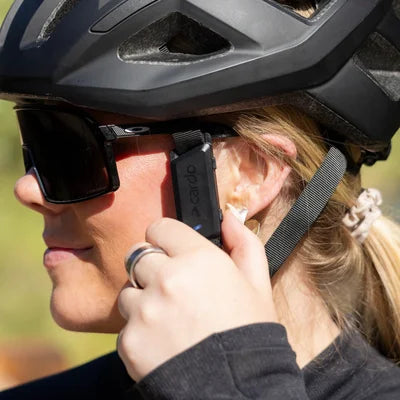
A ski helmet intercom sits on the outside of the helmet. Cardo offers a strap mount and an adhesive plate for Packtalk Outdoor, and you can find both among the Packtalk Outdoor accessories. Choose a position on the side of the shell where the unit will not cover a vent, block the goggle strap clip or sit where your hand rests when you lift your goggles. If you use the adhesive plate, clean the shell first and follow the curing time in the instructions before you ski. Never cut, carve or drill the foam liner or the shell to make room for audio, since that liner is what absorbs an impact.
Place the Microphone
An intercom needs its microphone close to your mouth to cut through wind noise. On a ski helmet, the microphone usually sits near the chin strap or along the lower edge of the ear pad. Check that it stays in place when you pull a neck gaiter or balaclava up over your face, since most skiers ride with their mouth covered for at least part of the day.
Re-Check the Fit After Installation
Once the speakers and mount are in, run the fit checks again: position, shake test, chin strap and ten minutes of wear. Speakers can push the ear pads outwards and change where the chin strap sits. If the helmet now feels tight around your ears, move the speakers within the pockets, swap to thinner foam behind them, or loosen the dial slightly. The fit always comes first, so adjust the audio to suit the helmet and never the other way around.
Fitting Kids’ Ski Helmets and Intercoms

Buy a child’s ski helmet for the head they have today. A helmet bought to grow into sits loose, shifts in a fall and slides down over their goggles on every run. Measure your child the same way you measure yourself and run the same shake test, with their goggles on.
Kids’ helmets have smaller ear pads and shallower pockets, so test-fit any speakers before the first ski day. An intercom changes how a family skis together: you can coach a child through a turn from behind them, or tell them where to stop, without shouting across the slope. Cardo sells Packtalk Outdoor in Duo and Family 4-Pack options, and ski schools can use dedicated instructor and student kits.
Where Packtalk Outdoor Fits
Best for: skiers and snowboarders with an audio-ready helmet who want music, calls and group talk in one unit.
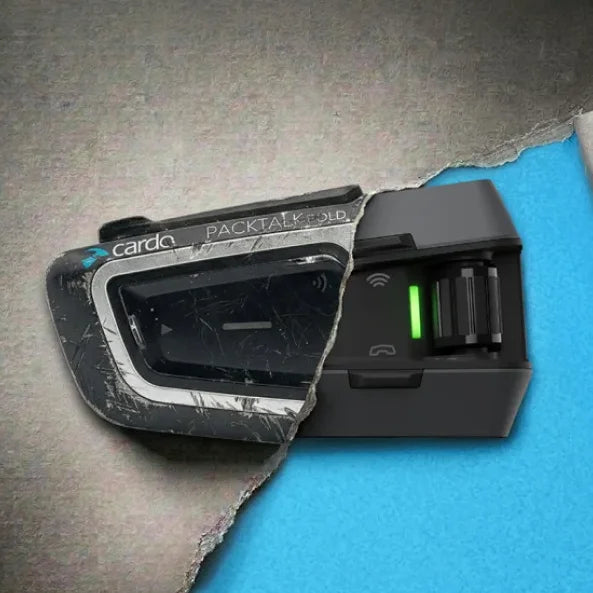
Cardo built Packtalk Outdoor for ski and snowboard helmets. Its 40mm JBL speakers drop into audio-ready ear pockets, the unit mounts on the outside of the shell with a strap mount or adhesive plate, and the intercom runs on Cardo’s 2nd Generation DMC mesh for up to 31 riders with no internet or cellular connection needed. Cardo rates the range at up to 1km (0.6mi) between two skiers and 5km (3mi) across the group in mountain terrain, and real-world range varies with terrain and obstacles. The unit carries an IP67 rating, lasts up to 10 hours in cold conditions, and responds to “Hey Cardo” commands through Natural Voice Operation, so you can adjust volume or answer a call with your gloves on.
If you are still deciding between audio chips, a helmet with built-in audio and an intercom, read Cardo’s guide to ski helmet speakers and headphones. For a deeper comparison of mountain communication options, see the guide to the best communication system for skiing and snowboarding.
Frequently Asked Questions
How do I know what size ski helmet I need?
Measure around the widest part of your head, about 2.5cm (1 inch) above your eyebrows, and match the measurement in centimeters to the helmet brand’s size chart. Sizes vary between brands, so treat a generic chart as a starting point. Try the helmet on and run the shake test before you buy.
Should a ski helmet be tight?
A ski helmet should be snug but not tight. It should move with your head when you shake it, with even contact all the way around and no painful pressure on your forehead or temples. If it gives you a headache within ten minutes, try a different size or shell shape.
Should I size up or down if I am between ski helmet sizes?
Try both sizes with your goggles on. Pick the one that passes the shake test with the adjustment dial in the middle of its range. Avoid sizing up to leave room for a thick beanie, since a loose shell can shift in a fall.
Can you put speakers in any ski helmet?
You can add speakers to most ski helmets with audio-ready ear pads, which have a pocket behind each pad for a flat speaker. Helmets without those pockets leave no room for speakers without pressing on your ears. Check the pocket depth and cable routing in the shop before you buy.
Does adding an intercom change how a ski helmet fits?
Speakers in the ear pads can add pressure around your ears and change where the chin strap sits, so re-check the fit after installation. Mount the intercom unit on the outside of the shell and never cut the foam liner to make room for audio. Adjust the speaker position or the dial until the helmet passes the same fit checks it did before.
Can I use my motorcycle intercom on a ski helmet?
Cardo makes Packtalk Outdoor for ski and snowboard helmets, with speakers sized for audio-ready ear pockets and battery life rated in cold conditions. It runs the same 2nd Generation DMC mesh as Cardo’s Packtalk motorcycle units. If you are choosing a unit for road riding as well, Cardo’s guide on how to choose a motorcycle headset covers fit for motorcycle helmets.
Is a snowboard helmet different from a ski helmet?
No. Ski and snowboard helmets are tested to the same snow sports standards and you size them the same way. Brands market some models to snowboarders with a lower, fixed-vent freestyle shape, but you can wear any certified snow helmet for either sport.
When should I replace my ski helmet?
Replace your ski helmet after any significant impact, even with no visible damage, because the foam liner can compress internally. Replace it sooner if the shell cracks, the liner breaks down or the straps fray. Follow the manufacturer’s guidance on replacement intervals for helmets you wear every season.
Ready to add audio to a helmet that fits? See the speakers, mounts and pack options on the Packtalk Outdoor page.
