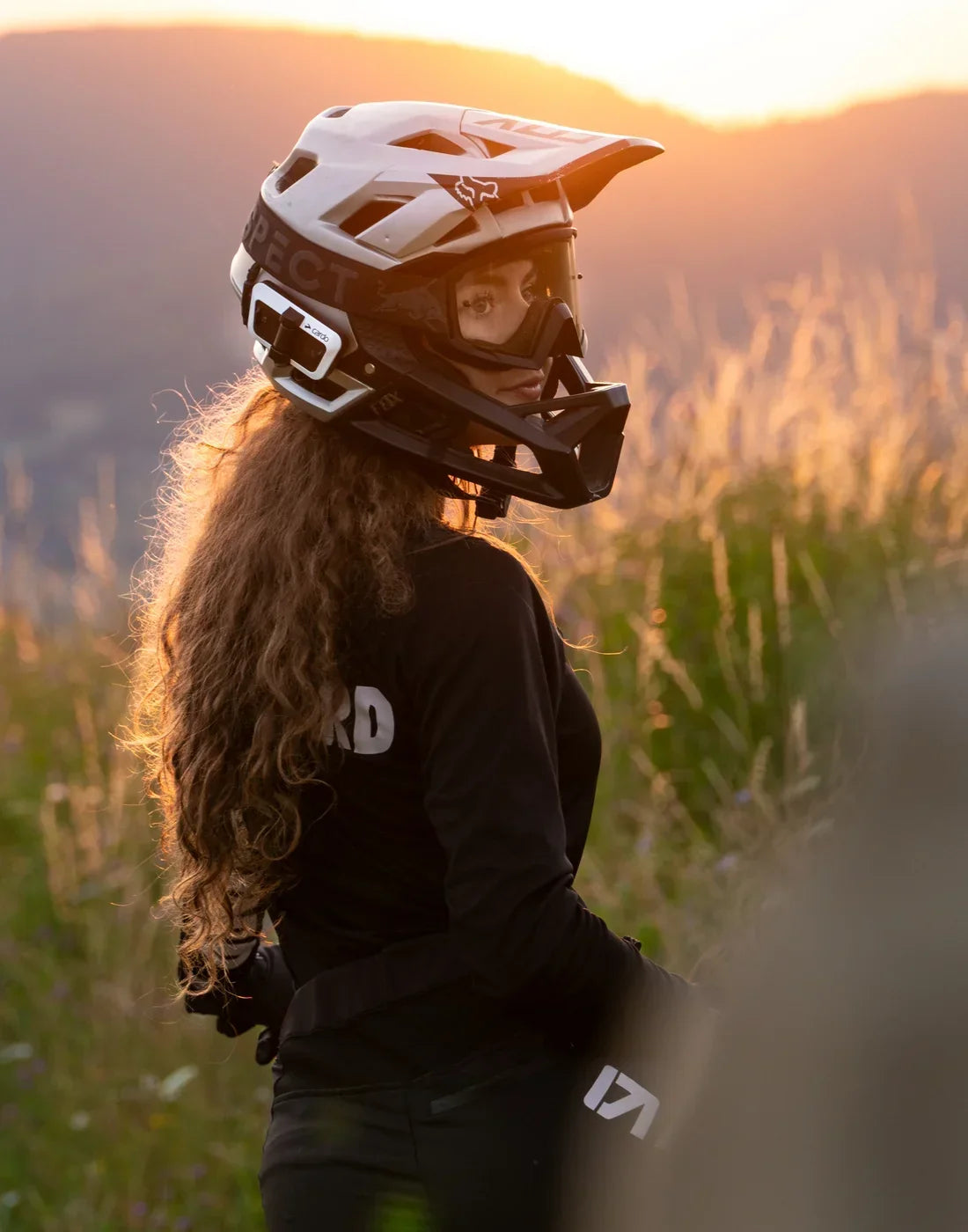
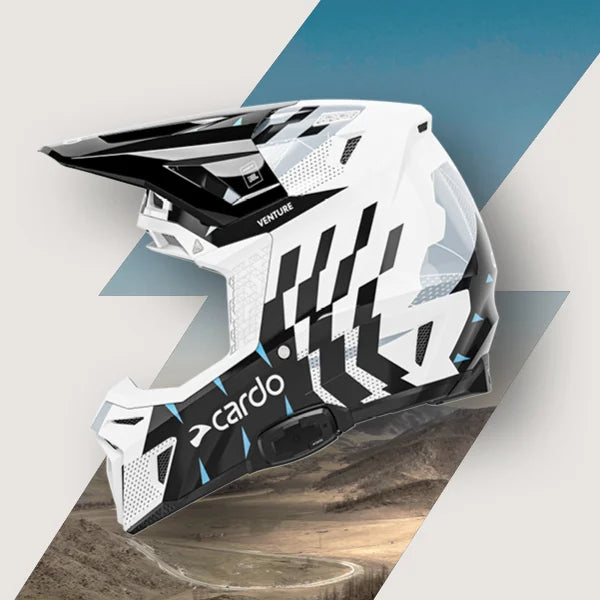
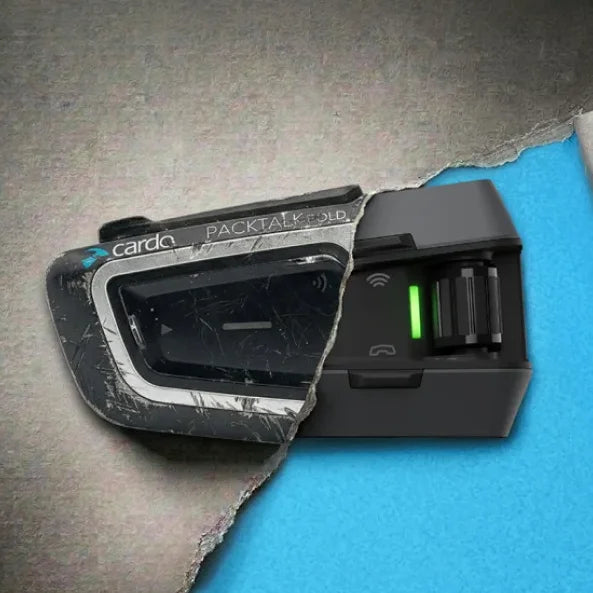


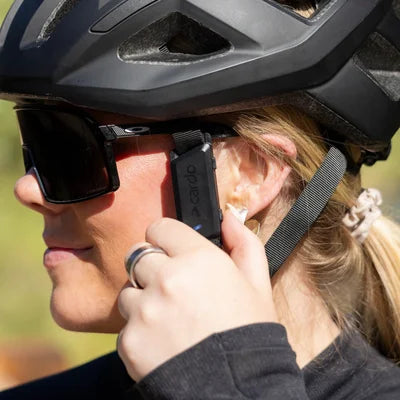



Somewhere around 40 mph the wind turns your helmet into a wall of noise, and the friend riding two bikes back might as well be on another continent. You wave a hand signal nobody sees. You miss the turn because your phone is buried in a tank bag. You pull over at every junction to regroup. A motorcycle intercom fixes all of that, and if you are new to group riding this guide explains how it works before you spend a penny on one.
The problems an intercom solves

Wind noise at speed drowns out everything, so shouting to a passenger or waving at the rider behind you stops working past about 30 mph. Groups get separated at lights, junctions, and in traffic, and without a way to talk, the riders up front have no idea the back half took a wrong exit. Taking a phone call or hearing turn-by-turn directions means either ignoring them or pulling over. An intercom puts a speaker and microphone inside your helmet so you can talk to your group, hear your navigation, take calls, and play music, all while keeping both hands on the bars and both eyes on the road.
How the technology works
An intercom is a small unit that mounts to the side of your helmet, with speakers that sit by your ears and a microphone near your mouth. It connects to your phone and to other riders' units over a wireless link. Two kinds of link exist, and the difference between them matters more than any other spec.
Bluetooth: the chain
Standard Bluetooth connects riders one to the next, like links in a chain. It works well for a rider and passenger, or a small group that stays close together. The catch shows up when the group spreads out or someone drops back, because each rider relies on the one beside them to pass the signal along, so a single gap can cut off everyone behind it until the connection rebuilds. Cardo's FREECOM line runs on Bluetooth, with the FREECOM 4X handling up to four riders and the FREECOM 2X built for a rider and passenger.
Mesh: the self-healing network

Mesh solves the chain's weakness. Cardo's Dynamic Mesh Communication builds a network where any rider can relay the signal to any other, so if one person drops out or rides out of range, the network reroutes around them without dropping the group. 2nd Generation DMC connects up to 31 riders and holds a group range up to 8km (5 miles) in open conditions as the signal hops from rider to rider, though real-world range shifts with terrain and obstacles. This is what runs on the PACKTALK range, and it is the reason bigger, more spread-out groups reach for a PACKTALK over a Bluetooth unit. The longer explanation of both technologies sits in our mesh versus Bluetooth guide.
Talking without touching a button

Modern intercoms take voice commands so you never fish for a button at speed. On current Cardo units, Natural Voice Operation responds to "Hey Cardo," so you can answer a call, start or end the intercom, change the volume, or control music by voice alone. For a new rider still building muscle memory on the controls, hands-free voice removes one more distraction from the cockpit.
Weather, battery, and the practical stuff
A helmet unit lives outdoors, so it has to handle rain and long days. Every current Cardo unit carries an IP67 rating, which means it is dust-tight and survives being submerged in a metre of water for half an hour, so a downpour becomes a non-event. Battery runs to 13 hours of talk time on current units, and a 20-minute fast charge buys you two more hours when you stop for fuel. That covers a full day in the saddle with room to spare.
Riding with friends on other brands
You do not all need the same brand to talk. Cardo units pair with Sena and other major systems over Bluetooth for basic intercom. The tradeoff is that mesh only works between units of the same brand, so a mixed group talks over a Bluetooth chain rather than a self-healing mesh, with shorter range and a smaller group limit. If your riding crew is settling on gear together, that is worth knowing before everyone buys.
Navigation and route planning

Talking to your group is half of it; the other half is knowing where you are going. The Cardo Ride app handles turn-by-turn navigation, route planning, and motorcycle-specific routing built for road riding, and it pipes the directions straight into your helmet speakers so you hear each turn without looking down. Device setup, pairing, and settings live in a separate app, the Cardo Connect App, which is also where firmware updates come through over the air.
Choosing your first intercom
Once you understand mesh versus Bluetooth, the rest of the decision is about how you ride. A rider and passenger or a small steady group can start on the FREECOM line, while anyone planning bigger group rides will want the mesh of a PACKTALK. Our buying guide to the best motorcycle intercoms walks through range, battery, waterproofing, and voice control across the current units so you can match a unit to your riding. You can also browse the full range of Cardo units to compare them directly.
How Motorcycle Intercomms Work - FAQs
Do I need an intercom for group riding?
Not always, but once a group grows past two riders, hand signals and shouting stop working. An intercom lets everyone talk in real time, which keeps the group together and safer at junctions and in traffic.
What is the difference between mesh and Bluetooth intercoms?
Bluetooth links riders in a chain, so one gap can cut off everyone behind it. Mesh, like Cardo's DMC, builds a self-healing network where any rider relays the signal, so the group stays connected even as it spreads out.
Can I use an intercom with my phone and GPS?
Yes. Current Cardo units connect to your phone for calls and music, and they pipe turn-by-turn navigation from the Cardo Ride app into your helmet speakers.
Are motorcycle intercoms hard to use while riding?
No. Natural Voice Operation on current Cardo units responds to "Hey Cardo," so you control calls, the intercom, and music by voice without touching a button.