



ATV is the umbrella term for any all-terrain vehicle with three or more wheels. Quad is the four-wheeled recreational subset of ATVs. 4-wheeler narrows it further to quads (and some trucks and jeeps) that add four-wheel drive. Most riders use these words interchangeably, but the distinction matters when you're shopping for a machine to handle the terrain you actually ride.
- ATV: any all-terrain vehicle with three or more wheels
- Quad: a four-wheeled ATV built for recreation
- 4-wheeler: a quad with four-wheel drive
- All 4-wheelers are quads, but not all quads are 4-wheelers
- Off-road communication: PACKTALK EDGE ORV for groups of up to 31 riders, FREECOM 4X DIRTBIKE for solo riders and small groups of up to 4
This guide breaks down each term, covers the main vehicle types you'll see when shopping, and walks through how to stay in contact with your group when you're off the grid.
What Is an ATV?
ATV stands for all-terrain vehicle. The category covers any vehicle built to handle mud, sand, snow, and rock, with at least three wheels. Motorcycles and dirt bikes do not qualify. Large all-terrain tyres let the machine roll over loose ground without bogging down.
The label covers three-wheelers, four-wheel quads, side-by-side UTVs, and heavier six-wheel utility rigs. Honda built the first recreational ATV in the early 1970s with three wheels, and the format went mainstream in the early 1980s with the arrival of the four-wheel quad. Three-wheelers were phased out by 1987 after safety concerns over stability.
Most ATVs sold today have four wheels, which is why quads and 4-wheelers get lumped under the same label. The full category is wider than that. Think of ATV as the parent term, with quads and 4-wheelers sitting underneath it.
What Is a Quad?
A quad is a four-wheeled ATV built for recreation. Suzuki coined the word in 1982 and used it for the first consumer four-wheelers. Quads replaced three-wheel ATVs once riders saw how much more stable four wheels were on uneven ground.
Honda and Kawasaki followed Suzuki into the market with their own versions. Suspension improved through the late 1980s, and quads became the standard format for racing, trail riding, and trick riding. Yamaha's Banshee, released in 1985 and discontinued in 2006, became one of the best-known sand-dune machines of that era.
Today, most people use "quad" to describe any four-wheel ATV that's not built for utility work. If you're racing, trail riding, or weekend exploring, you're on a quad.
What Is a 4-Wheeler?
A 4-wheeler is a quad with four-wheel drive. Honda built the first one in 1986 with the FourTrax, and the format took over quickly. Once riders saw what 4WD did for traction on snow, ice, mud, and rock, two-wheel-drive quads stopped being competitive for serious off-road use.
Strictly speaking, a 4-wheeler is any four-wheeled vehicle. In rider language, it means an ATV with 4x4 drive. Some trucks and jeeps qualify too if they have all-wheel drive. All 4-wheelers are quads, but not every quad has 4WD.
ATV vs Quad vs 4-Wheeler: Which Should You Choose?
Choose based on the terrain you actually ride and how the machine will be used.
For Serious Off-Road Riding
Choose a 4-wheeler. Four-wheel drive is the single biggest factor in whether you can finish a trail or get stuck on it. Confirm 4WD on the spec sheet before buying, since plenty of ATVs labelled as 4-wheelers ship as 2WD models. Look for thick-tread tyres built to clear debris.
For Groomed Trails and Open Ground
A standard quad without 4WD will handle it. You'll save money and weight. A used quad is worth considering as a second machine or a starter, though most older quad-only models are now over fifteen years old, so check service history before you commit.
Watch the Label
"ATV" on its own is broad. Don't assume four-wheel drive based on the term. Read the spec sheet and confirm the drivetrain before you buy.
Types of ATVs and 4-Wheelers
Once you've decided on the drivetrain, the next call is what the machine is built for. Most fit into one of four categories.
Sport ATVs
Built for racing and aggressive trail riding. Lighter chassis, stiffer suspension, sharper handling, more horsepower per kilogram. Sport ATVs spend their time on dirt tracks, motocross courses, and fast trail loops. They're not built to haul, and they're not built to tour.
Utility ATVs
Designed for work. Stability, load capacity, and low-end torque take priority over speed. Farmers, ranchers, wildlife managers, and search and rescue teams ride these. Most run 4WD as standard. Many include rear racks, front cargo platforms, and integrated storage for tools and kit.
Recreational ATVs
The middle ground. Recreational ATVs cover camping, exploring, and casual trail riding. Pricing runs the full range from entry-level to premium, so check the drivetrain and suspension before you buy. The cheapest recreational ATVs often skip 4WD and run softer suspension, which limits them to easier ground.
Youth ATVs
Scaled-down ATVs built for younger riders, with smaller engines, speed limiters, and parental override controls. They're fine for groomed trails, campgrounds, and learning to ride. They're not built for long expeditions or rough terrain. If your kid is serious about riding, plan to size up within a few years.
Staying Connected on Your ATV or 4-Wheeler
Off-road riding takes you out of phone signal fast. Whether you're riding with a group of friends, a hunting party, or a search and rescue crew, you need a way to talk to each other without stopping. Cardo's off-road communication range is built for ATVs, quads, side-by-sides, and snowmobiles, and it works the same way as the motorcycle range: no cellular signal needed, just rider-to-rider audio through your helmet.
PACKTALK EDGE ORV: Built for the Trail
The PACKTALK EDGE ORV is Cardo's flagship off-road unit. It runs 2nd Generation Dynamic Mesh Communication, which links up to 31 riders into a self-healing network: if one rider drops out of range, the network reroutes around them automatically and rejoins them when they're back in. Unit-to-unit range is up to 1.6km, with real-world range varying based on terrain and obstacles.
Key features:
- 2nd Generation DMC mesh, up to 31 riders
- Up to 1.6km unit-to-unit range
- Patented magnetic Air Mount
- IP67 waterproof (dust, mud, sand, rain)
- Sound by JBL
- Natural Voice Operation ("Hey Cardo")
- Over-the-air firmware updates via the Cardo Connect App
- Bluetooth 5.2, 3-year warranty
FREECOM 4X: For Smaller Groups and Solo Riders
The FREECOM 4X is the right call when you're riding solo, two-up, or in a small group of up to 4. It uses standard Bluetooth intercom rather than DMC mesh, so the group sits in a chain rather than a self-healing network. For a small group that rides close together, that's enough.
Key features:
- Bluetooth intercom, up to 4 riders
- JBL audio
- Natural Voice Operation
- IP67 waterproof
- Over-the-air firmware updates
If your group might grow past four riders, or you ride spread out, the PACKTALK EDGE ORV is the better long-term choice. If you mostly ride alone or with one or two regulars, the FREECOM 4X covers it.
Safety and Maintenance on the Trail
Safety First
Off-road riding puts you a long way from help. Before you head out, pack a basic medical kit with gauze, antibacterial cream, and the supplies you'd need to handle a cut or a sprain on the trail. A winch or recovery strap lives in the cargo box on every serious off-roader's machine, since mud, sand, and snow will eventually trap a wheel.
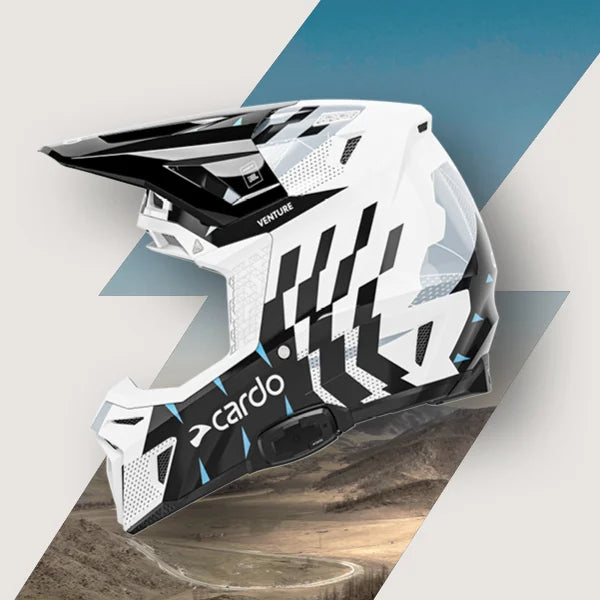
A helmet is non-negotiable on an ATV, regardless of what your state requires. Trail debris, low branches, and rollovers all happen. A motorcycle-rated helmet with eye protection covers it. Once your helmet is sorted, fit a communication system inside it so you can stay in contact with the group without taking a hand off the bars.
Maintenance Checklist
Off-road machines take a beating. After every ride, wash off the mud and dirt before it dries on. Caked-on mud holds moisture, and moisture brings rust and electrical faults. Check tyre pressures, look for fresh scrapes or punctures, and listen for anything that sounds different from the ride before.
Store the machine inside or under a cover when you can. Cold, damp storage shortens the life of seals, batteries, and electrical connectors. Follow the service schedule in the owner's manual. Different brands and engine sizes need different service intervals, and skipping them is the fastest way to end up stranded.
If you're new to off-road riding, it's worth learning about the different types of motorcycles to get a feel for how machine choice affects what you can ride and where.
Which Cardo Off-Road Unit Is Right for You?
|
Rider Type |
Recommended Unit |
Technology |
Group Size |
|---|---|---|---|
|
Solo rider |
FREECOM 4X |
Bluetooth |
1 rider |
|
Two-up or small group |
FREECOM 4X |
Bluetooth |
Up to 4 riders |
|
Group trail riding |
PACKTALK EDGE ORV |
2nd Gen DMC |
Up to 31 riders |
|
Large groups, spread out |
PACKTALK EDGE ORV |
2nd Gen DMC (self-healing) |
Up to 31 riders |
|
Snowmobile / side-by-side |
PACKTALK EDGE ORV |
2nd Gen DMC |
Up to 31 riders |
Ride Further, Stay Connected
ATVs, quads, and 4-wheelers all do different jobs. The right machine for you depends on the terrain you ride, the drivetrain you need, and how often you head out with a group. Whatever you ride, fit a communication system that's built for off-road conditions: waterproof, voice-controlled, and tuned for helmet acoustics.
Browse the full Cardo off-road communication range, or compare the PACKTALK EDGE ORV and FREECOM 4X to find the right fit for how you ride.
ATV vs Quad vs 4-Wheeler - FAQs
What is the difference between an ATV and a quad?
An ATV is any all-terrain vehicle with three or more wheels. A quad is a four-wheeled ATV built for recreation. Every quad is an ATV, but not every ATV is a quad. Three-wheelers and six-wheel utility rigs are ATVs that are not quads.
Is a 4-wheeler the same as an ATV?
A 4-wheeler is a type of ATV, specifically a quad with four-wheel drive. The word "ATV" is broader and covers any all-terrain vehicle with three or more wheels. If you see something labelled as a 4-wheeler, you can assume it's a 4WD quad.
What is the difference between a quad and a 4-wheeler?
A quad is a four-wheeled ATV. A 4-wheeler is a quad with four-wheel drive. All 4-wheelers are quads, but not every quad has 4WD. If you ride snow, mud, or rocky trails, you want a 4-wheeler.
What does ATV stand for?
ATV stands for all-terrain vehicle. The category covers any vehicle with three or more wheels built to handle mud, sand, snow, rock, and uneven ground.
What is a UTV and how does it differ from an ATV?
A UTV is a utility terrain vehicle, also called a side-by-side. UTVs seat two or more riders side by side with a steering wheel, pedals, roll cage, and seat belts, more like a small car. ATVs are straddle-style with handlebars and a single seat. Both fall under the broader all-terrain category.
Can you ride an ATV or quad on the road?
That depends on your state. Some US states allow ATVs on public roads with the right registration, lighting, and a road-legal tyre setup. Most do not. Check your state's DMV rules before riding on or crossing public roads.
Do you need a helmet to ride an ATV?
Most US states require a helmet for riders under a certain age, and several require helmets for all ATV riders regardless of age. Even where it's not required, wearing one is the right call. Trail debris, low branches, and rollovers all happen on ATVs. A motorcycle-rated helmet with eye protection is the standard.
What is the best ATV for beginners?
For a beginner adult rider, look at a utility or recreational ATV in the 400cc to 500cc range with 4WD and automatic transmission. That gives you enough power to handle hills and varied terrain without being aggressive. For younger or smaller riders, a youth ATV with a speed limiter is a safer starting point. Whichever you pick, ride with a group, wear a helmet, and run a communication system so you can call for help if you need it.